What is a Gear Rack?
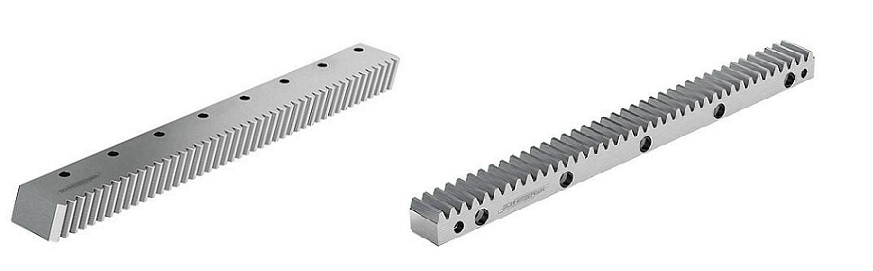
In the field of large machine building, there are instances where the design engineer must transfer components over long distances while enduring high axial forces. This type of requirement is commonly seen in applications such as automation, robotics, machine tools, and packaging. While there are various options for movement, such as ball screws, linear motors, and drive belts, gear racks are a cost-effective choice when the required stroke exceeds 4 meters. They allow for continuous linear movement over almost limitless spans, making them ideal for large machines and systems. The straightforward design and robustness of gear racks make them easily adaptable, giving engineers the flexibility to design linear movement systems.
What is a gear rack?
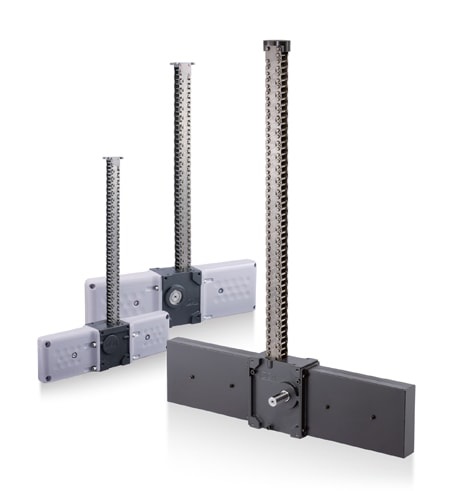
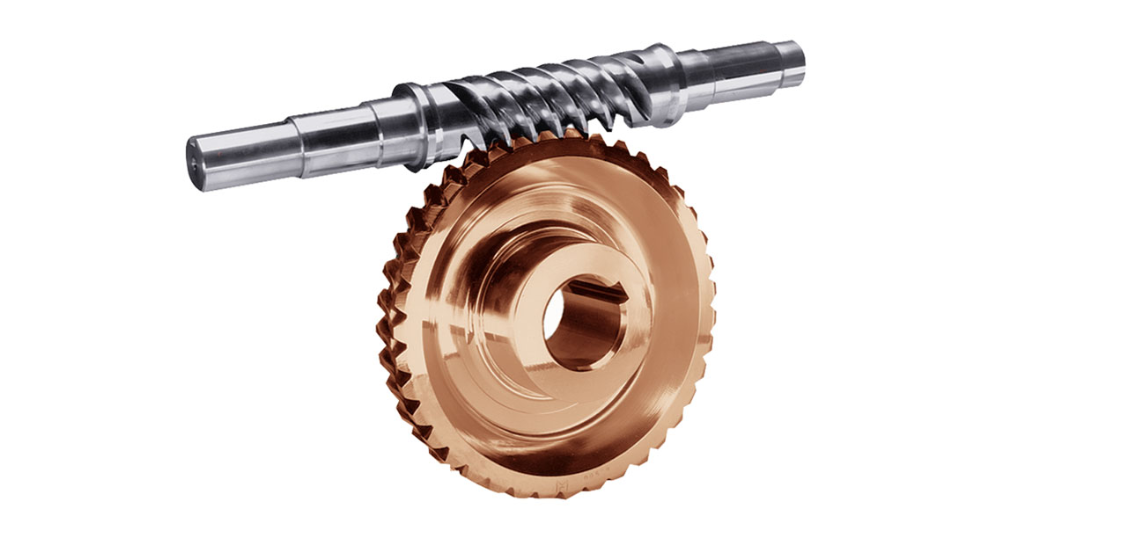
A gear rack is a budget-friendly linear drive component that is often used for rail distances of more than 4 meters. This technology operates on a rack and pinion system, where the pinion moves along a fixed gear rack to drive a slideway. A significant advantage of gear racks is their consistent rigidity along the entire length of motion. This feature enables them to withstand high axial forces without any limitations. Gear racks are highly economical for long strokes, and they can serve both guiding and driving purposes. While the maximum length of a single gear rack is limited, longer lengths can be achieved by connecting two rails with butt joints.
Why Use Gear Racks?
There are compelling reasons why design engineers prefer gear racks for linear motion in machines:
Stiffness at Every Position: Gear racks maintain consistent stiffness at every position of travel, ensuring reliability as the pinion is in constant contact with the fixed rack.
Exceptional Movement Accuracy: Gear rack technology offers exceptional movement accuracy over long lengths of travel, a crucial factor in applications demanding precision.
Flexibility and Customization: With high flexibility and customization options, gear racks allow engineers to tailor the teeth specifications, surface quality, and hardening processes to meet specific design requirements.
Economical Motion: Gear racks prove to be the most economical form of machine motion for travels exceeding 4 meters, offering a cost-effective solution without compromising performance.
Applications and Benefits
Gear racks are essential for machine builders who are designing systems that require component travel over extensive ranges of motion. These systems, which include automation and robotics (7th axis), machine tools like lathes, presses, stamps, machining centers, medical devices, material handling and flow systems, packaging machines, and printing presses, can benefit from the competitive advantages that gear racks offer. By using case-hardened gear racks, OEMs can achieve more precise movement at a lower cost, which is a desirable feature for end users who want to upgrade their existing machines to handle higher loads and accelerate faster without having to purchase a completely new design.
Conclusion
In the field of machine building, it is common to design products that require the transportation of components or systems over long distances while experiencing significant axial forces. While there are various options for linear motion, gear rack technology stands out as the most advantageous due to its precise movement and cost-effectiveness.
HVH Industrial Solutions is an authorized distributor of Schneeberger, Gudel, Gambini Meccanica, GAM and Redex and we offer a wide range of their products. We work closely with their engineering team to provide superior customer service and engineering support.
If you have any questions, write to us via live chat or call or send us a quote request. The HVH team is always ready to help you.
Requesting ...
File size should not exceed 20 MB.
Are you sure you want to delete file?